Search

User Education

Security Awareness Training & Phishing Simulations

Human error is the leading cause of security breaches. Employees unknowingly clicking on phishing emails, malicious links, or fraudulent attachments can lead to data breaches, financial loss, and compliance violations. Your team is the front line of your defense.

Down arrow

Table of Contents

Common Cyber Threats Employees Face

One mistake can cost millions—Make sure your team is prepared.

Why Businesses Need Security Awareness Training

Youtube video

Your Team Is The Most Important Link In Your Organization’s Security

The number of cyber attacks has been increasing every year. The most pervasive threats including phishing and ransomware, target users to breach your security defenses.

When end users are educated on how to spot a cyber attack or avoid one, the risk of a breach reduces massively.

Enroll your teams into awareness training today to keep your organization and clients safe.

Youtube video

Our Security Awareness Training & Phishing Simulation Services

Interactive Cybersecurity Awareness Training

  • Engaging training modules on phishing, ransomware, social engineering, and data security.

  • Real-world attack scenarios

Phishing Simulation Campaigns

  • Phishing tests to measure employee resilience against attacks.

  • Track improvements and identify high-risk users with detailed reporting.

Social Engineering Defense Training

  • Learn how hackers exploit human psychology to bypass security controls.

Ongoing Security Awareness Reinforcement

  • Regular security training and refreshers to keep security top-of-mind.

Reporting & Risk Insights

  • Measure training effectiveness with detailed click-through rates and reporting metrics,.

Build a security-first culture—Start your employee training today!

Security Awareness Training Modules

Pricing from USD $3.50/user/month

Enhanced Features and Support

Training Formats

"We absolutely love the security training awareness module, especially the real-world scenarios to show applications of key concepts. Kobalt.io provides excellent online training materials that are very engaging and instrumental for users working from home."

– David Keene, Vice President of Engineering, Vantage Point Logistics

Regular Phish Testing

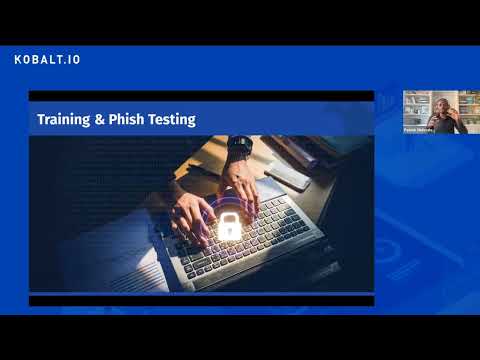
We pair our security awareness training with continuous phish testing. Regular testing and real-time feedback are instrumental in maintaining a high level of alertness amongst your team.

Phish Testing

End users are the largest and most vulnerable target in most organizations. Phishing attacks grow every year, making an end-user security awareness training program and regular phishing tests essential for any security programs.

What is phish testing?

A phishing test is a mock phishing attack simulated by professional security experts. It is created to test how effectively an organization’s employees can resist phishing attacks. Depending on the test results, organizations can work with Kobalt.io to carry out various remediation measures to tighten up security and train employees.

Tailor phish testing to your organization

For example:

  1. Include all your employees or a subset, according to your objectives for the test.
  2. Run tests for a month with approximately two emails targeted at each user per week, with a mix of standard and custom messages.
  3. Design remediation activities based on actionable reporting and metrics Kobalt.io provides.
  4. Run tests periodically to keep your team’s skills sharp, measure improvements and reduce your risks.

Security Frameworks That Require or Recommend Security Awareness Training

Why Choose Security Awareness Training From Kobalt.io?

Enroll Your Team Now Or Chat with Us

Fill out this form now to enroll your team

Frequently Asked Questions (FAQs)

We send simulated phishing emails to employees to test their ability to recognize attacks. The results help identify training gaps and high-risk users.


Every organization benefits from security training, especially industries handling sensitive data, financial transactions, healthcare information, or intellectual property.


Yes! Ransomware attacks often start with phishing emails. Training employees to identify threats reduces the risk of infection.


If employees click on phishing tests, they are redirected to a landing page with a quick training
experience, including a short, funny, but educational video along with tips on how to spot and
avoid phishing emails in the future

Data shows that employees are less likely to retain information if the security awareness training is conducted infrequently. This is why Kobalt.io offers bite-sized content on a variety of topics to keep employees engaged, and tests to ensure comprehension.

The cost of an effective security awareness training program will vary depending on the size of your organization. Kobalt.io focuses on providing cybersecurity solutions to sall and mid-sized business. The cost of our user education is $3.50/user/month, which includes security awareness training and regular phish testing. For added layers of security, buddle with our other services, such as our security and privacy gap assessment and managed threat detection. 

HIPAA training is required for the individuals and organizations on which HIPAA regulations are applicable. These organizations
are called in legislative terms as Covered Entities and Business Associates. According to the Department of Health and Human Services (HHS), there are three categories of Covered Entities: healthcare providers, healthcare clearinghouses and health insurance plans.

According to statistics, after 12 months of consistent training, an employee is 70% less likely to click
on a phishing email

We strongly advocate for conducting phishing tests for all employees within a company. No individual, including the C-suite or IT personnel, should be considered immune to the risks posed by phishing attacks. In fact, these departments often become prime targets for such attacks, underscoring the critical importance of training everyone. Furthermore, fostering a security-conscious culture requires a top-down approach. If leaders are unwilling to participate in phishing tests, it sends a concerning message to the rest of the company. Therefore, it is essential to train every individual within the organization.


Useful Resources

Blogs

Kobalt.io Cybersecurity Education

Why Is Security Awareness Training Important?

Everyone in the organization must have a certain level of security awareness training regardless of whether or not they have a formal cybersecurity background. In this article, we’ll look at the importance of security awareness training and how it can benefit organizations.

Read More »
cybersecurity

How to Develop A Good Cybersecurity Program for Your Organization?

A cybersecurity program helps organizations coordinate a defense to all types of cyber threats. There are many aspects in the overall security of a business, both administrative and technological. Building and maintaining customer trust is a fundamental aspect of running a sustainable and successful business. In the past, doing so was straightforward but in today’s world, the internet has opened businesses to attacks that expose sensitive data, such as customer contacts, billing, and some other personal information. This requires modern security plans to weave technology and processes together to overcome the web of complicated external regulations, software and hardware choices, as well internal policy design and structure.

Read More »

Webinars

Business Email Compromise and Defense |Kobalt.io Webinar

Business Email Compromise and Defense

As businesses scale to meet rising demands, getting a clear visibility of what is happening in your digital assets is vital. It is important to run continuous monitoring to effectively scan for a broad range of attacks, troubleshoot potential risks and secure your tech stack.

Read More »
Security Awareness Webinar - Kobalt.io

Fortifying Your Security Frontline with Awareness Training

Cyber security in the workplace has become increasingly critical as more organizations migrate to cloud services. As adoption of digital channels and work from home initiatives have grown exponentially, so too has the number of phishing attacks, business email frauds, data breaches and ransomware attacks.

Read More »